
Why did we write this newsletter?
To help you understand what you can do to make our world cleaner, greener and happier. Without all the big scary words of ‘climate change’. The way our parents and grandparents did it, one small thing at a time! :)
Here are the bits ahead:
Snack Time Story
Crossword Time
Two Things To Do
Fun Facts
Conversations
Explore More
Dear Parents,
We recommend going through this newsletter slowly over the month. You don’t need to tackle the whole thing today. In fact, please don’t do it all at one time! Take one bit or activity a week, go through it and explore it with your child. Happy reading!
(If the entire letter doesn’t appear on email, click on ‘view on browser’ or ‘read in app’.)

To New Friends
If you asked Piku, how many friends he had. He would proudly tell you, “Everyone in my class!” Even in his apartment building, he knew every uncle and aunty and often spent time chatting with them. He never failed to wave a hello and offer water and snacks to Kishori, the vegetable vendor, and Satish, the security guard.
He loved the world - of his home, his school, and his neighbourhood.
Piku loved visiting the malls and restaurants with his parents on weekends. And the occasional vacations that took him to places around the world, he would meet new people and learn about their cities and countries.
Till one day, Vena and Mittal came to his classroom. To talk about a world that Piku had never noticed, yet. They introduced themselves as ecologist and naturalist, how cool was that! And took the class to the school’s garden that was full of trees and flowering plants. Handed them a bunch of tiny magnifying lenses and mini-binoculars to share among each other.
After examining each other’s nose boogers with the lens and laughing a lot, he and his classmates fell silent as Mittal and Vena pointed out to a tree trunk and asked again and again, “Can you see? Can you?”
Piku was confused. What was he supposed to look at? What was it that his classmates could see and were so excited about? The white spots? The red ants? The green-ish bark of the tree?
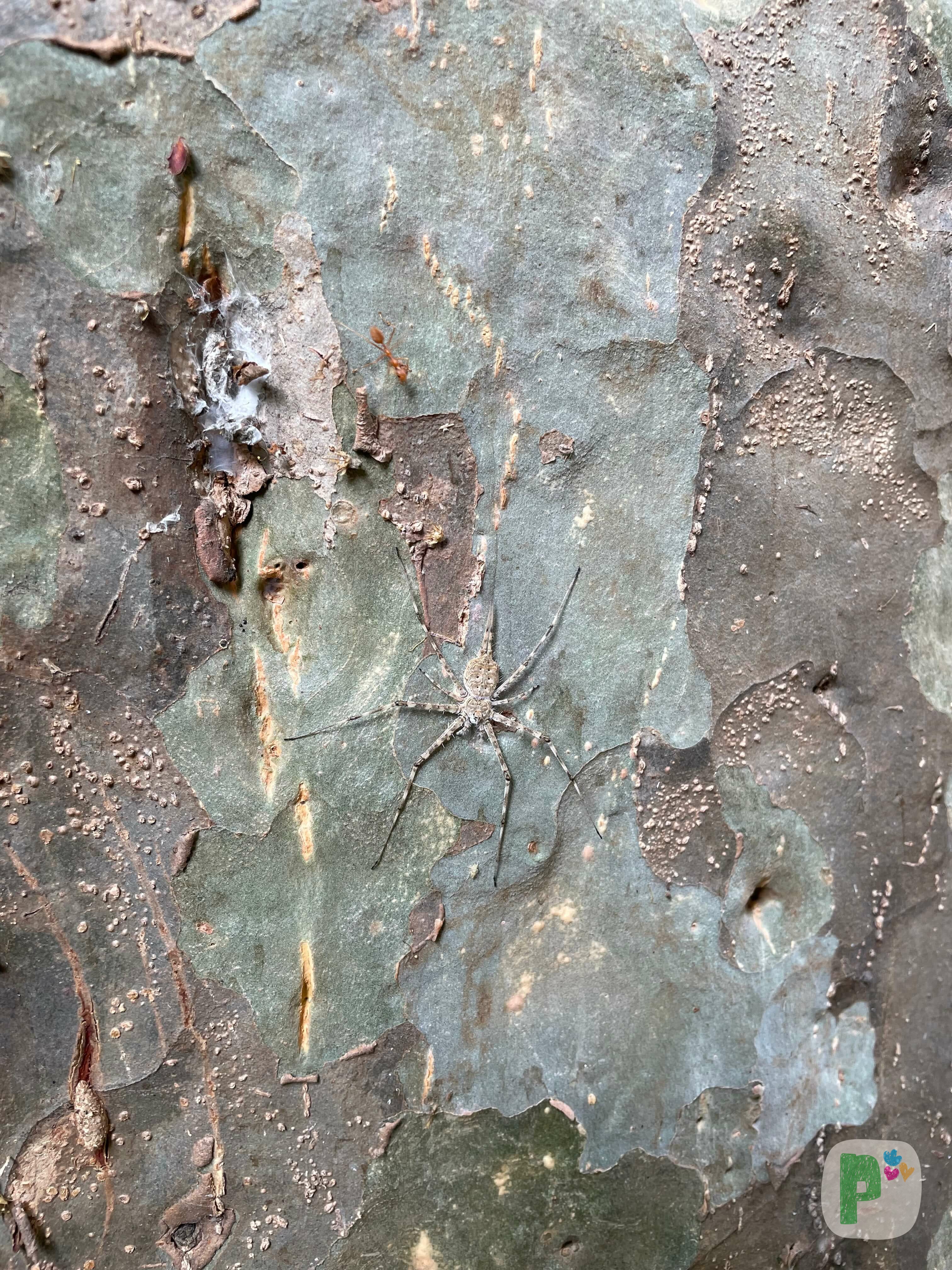
Till he finally landed on it. The long legs were clearly noticeable now. The perfect camouflage with the tree’s trunk was epic.
Vena piped in, “She is the two-tailed spider! She munches on smaller bugs and keeps their population in check. Important, isn’t she?”
Meanwhile, Mittal was pointing excitedly to a fly on one of the yellow flowers in the garden. But wait a minute, she was calling it a bee! A bee? Really?
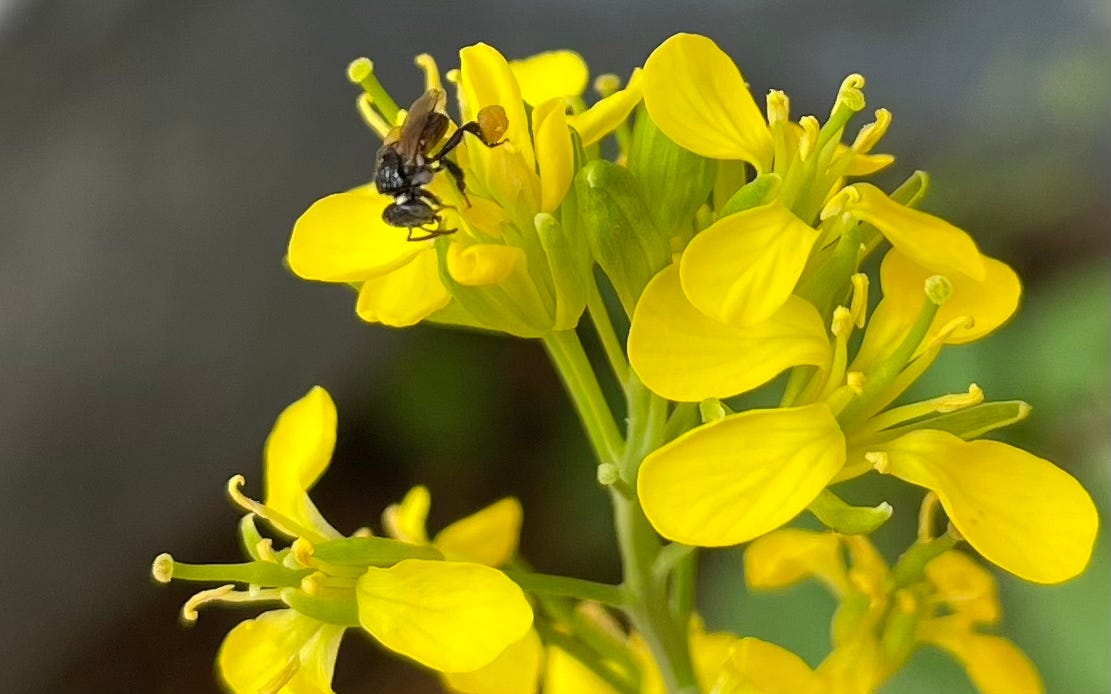
Vena told them that this is India’s smallest bee, called the Indian Stingless Bee. “Do you see what’s on its legs?“ she asked the group.
It took a little inspecting with the magnifying lens. One of Piku’s friends shouted in excitement, “Pollen, from the flowers!”
“Pollen, it is! Bees dip into flowers to drink nectar and, in return, help plants and trees grow far and wide when they carry the pollen away. They are the ones who help make fruits and vegetables out of flowers. Without them, we would have nothing to eat,” explained Vena.
“What do we do to help them live longer and longer?” asked Piku.
To which Vena replied, “It’s simple, grow more plants that belong to your city. Grow more trees. Don’t be scared of the beehives, that’s their home. They go buzzing about their business. You go buzz about yours.”
Suddenly, Mittal pointed to the tree behind Piku, “Look! A barbet on the fig tree!”
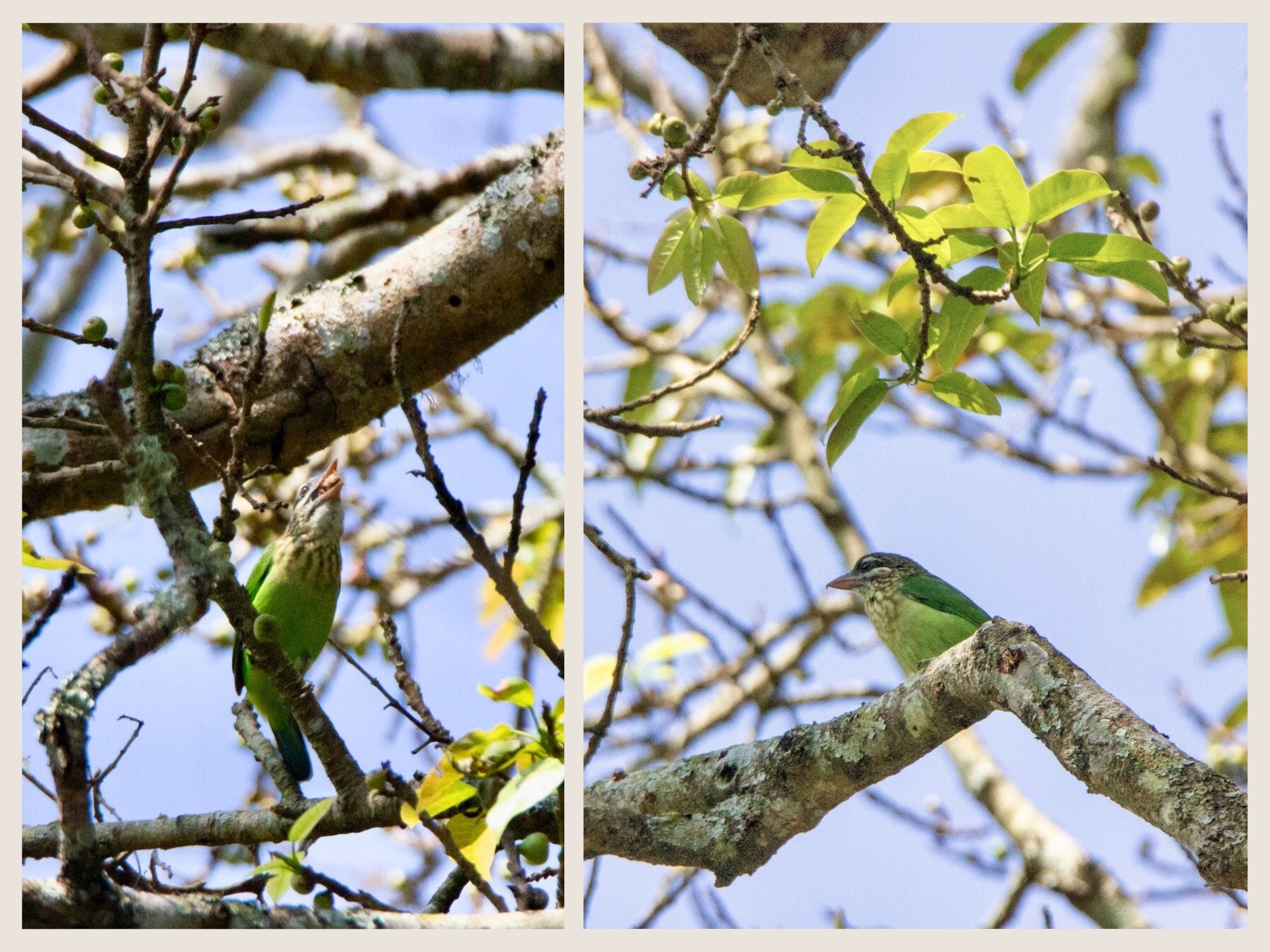
“You can find barbets in almost every patch of trees in almost every city. There are 9 different species of barbets found in India. This one is a white-cheeked barbet,” added Mittal.
There she was, a beautiful green bird with a brown head and white cheeks. Breaking down small juicy figs, one by one, and popping them in. They followed her for a while, till she flew to a tree trunk that had a hole in it.
“That’s the nest,” said Mittal. Barbets nest in trees! Like owls? Everyone was amazed.
The class squashed ripe figs to look inside.
Marvelled at different species of butterflies in the garden.
Found a ladybird beetle.
Spotted sparkling sunbirds.
And an hour flew by!
It turned out to be quite a day.
Piku came home after school and went about his day, but his mind was still in that garden with his newfound friends.
At the dinner table, he told his parents all about the beautiful beings he saw. And how Vena and Mittal explained how the trees, animals, birds, and insects each play an important part in helping humans with food, water, and air.
They chatted about the lizards in their home, the moths that circled the lamp on the wall, and more creatures living with them. Piku made plans to go to the park with mom and dad to look up more spiders and birds on the weekend.
I can’t wait, he thought! Is it Friday already?
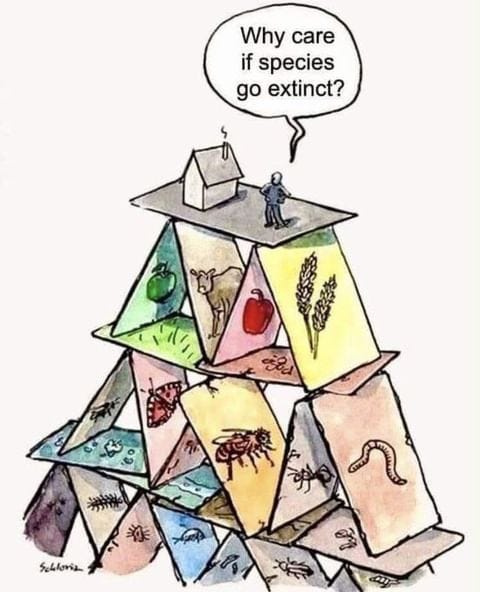

Do you think you have a keen eye? Do you notice flying, buzzing, and silent beings around you, just like Mittal and Vena (and now Piku)?
Play this crossword to find out. It’s easy if you play as a family, we promise!
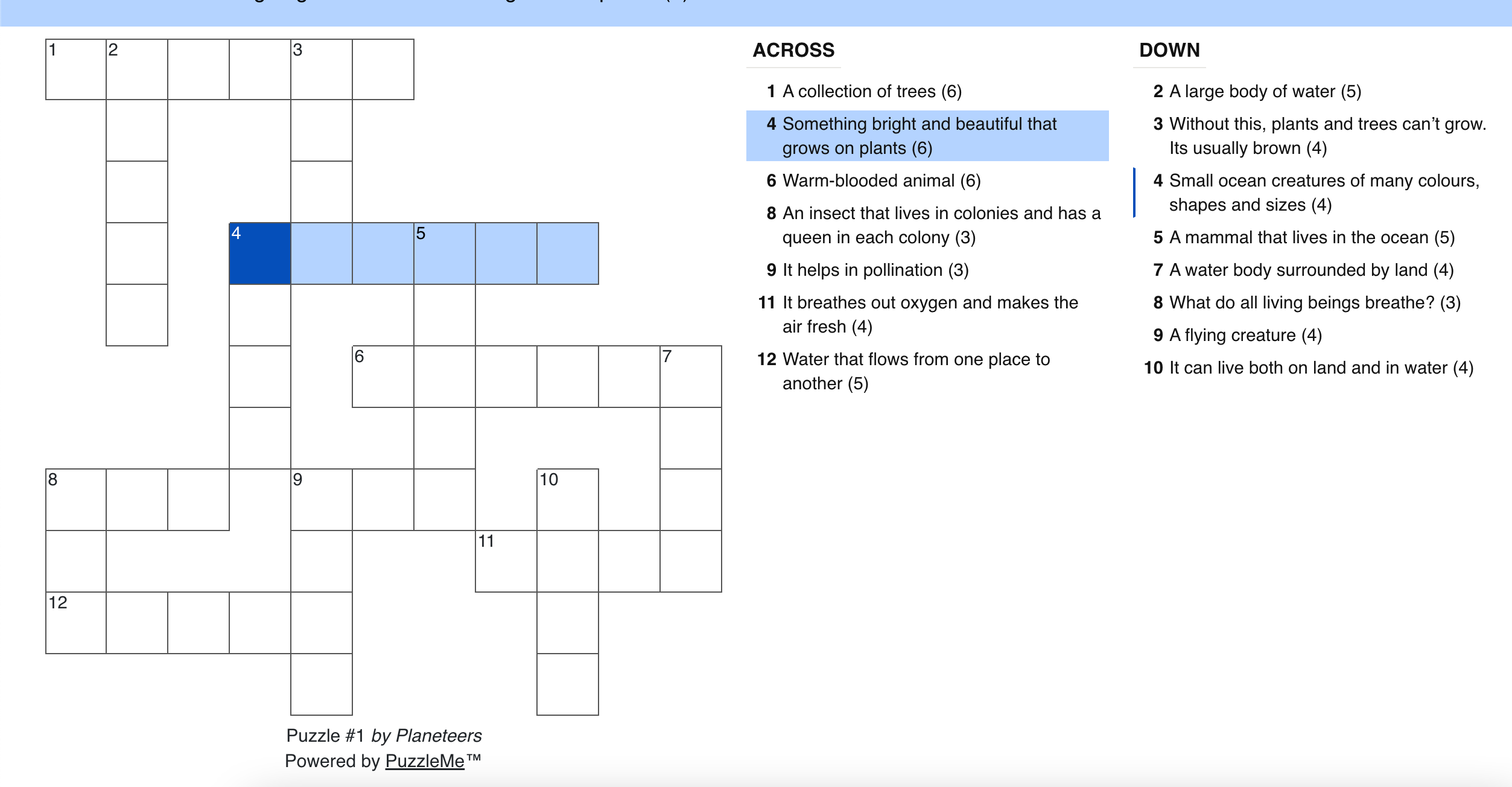
Don’t forget to tell us how you did in the comments.
Psst… figured out the theme of this letter yet?

Two fun and easy things to do this month, with your parents, siblings or friends:
Find Friends in Nature
Do you have a garden or a park nearby? Go there today and find as many nature friends as you can - grass, trees, soil, animals, birds, insects, amphibians, reptiles, and more. Write or draw all that you can notice.
You can do this everywhere you go - in school, on holiday, at your grandparents’ house. Each city and country will have different nature friends for you to find. Have fun making discoveries everywhere you go. Keep your eyes and ears open!
How can I touch the Earth?
Find some grass. Or some mud. Or sand. Take off your shoes and walk. How does it feel? Touching the ground with our feet is amazing for our bodies. It relaxes and recharges us (just like you plug in a charger for your mom’s phone). We sleep better, feel happier and become stronger. All this just by playing on the ground without your shoes! Tell your mummy or papa to take you down every day, just for 10 mins, so you can become stronger faster!
Challenge for you - can you find an interesting new way to touch the Earth everywhere you go? Maybe a little stream to walk across, a small tree to climb, or the beach?

Do you know: with how many species do we share our planet?
Scientists have described about 2.16 million species so far. 2160000.
1.06 million insects, 95966 arachnids, 90820 crustaceans, 87254 molluscs, 36953 fishes, 12263 reptiles, 11195 birds, 8776 amphibians, 6736 mammals, 5641 corals.
But scientists think that our planet is home to 8.7 million species.
8700000 and humans are just 1 of them! Mind-blowing, isn’t it?
Did you know: close to 71% of our planet Earth is covered by oceans!
No wonder the sea creatures are far too many than the beings on land. Got a globe? Spin it and notice all the oceans and land. Do you see the difference?

Dear Parents,
Here are some simple conversation topics we suggest - use them at bedtime when your child wants to ‘chat’ or while they’re winding down after a busy playground session.
Ask your child the question, let them think and share their opinion with you.
You may give your opinion / ask more questions / encourage a longer conversation on the topic.
You definitely do not need to go through all of them - pick and choose the ones you like, or do them all if you and your child are both happy to!
“Where do you think the bugs in our garden go to sleep?” (Purpose: Fosters empathy for wildlife and builds understanding of habitats.)
“Why do you think some animals only live in certain places?” (Purpose: Introduces the concept of ecosystems and species diversity.)
“What would happen if we stopped mowing the grass?” (Purpose: Helps kids imagine wilder landscapes and understand natural regeneration.)
“What do animals do when it gets really cold?” (Purpose: Builds awareness of cycles in nature and seasonal shifts.)
“What would a forest need to take care of all its animals?” (Purpose: Helps kids understand interdependence in ecosystems.)
“What would happen if trees could talk—what would they say to each other?” (Purpose: Uses storytelling to create emotional and imaginative links to nature.)
“What could we do to make our garden or balcony better for wildlife?” (Purpose: Encourages hands-on thinking about environmental action.)
”Are humans more important than animals for the planet, just because they have intelligence and can make things?” (Purpose: Encourages introspection and ethical co-existence.)

Dear Parents, here are some additional links for you to browse through.
Read / watch them when you have a few minutes and share with your child, depending on how old they are and how much they would understand.
Project Green Leh Ladakh by Sankalptaru Foundation (Creating Apple Villages in Ladakh):
Rewilding India: 12 Inspiring Conservation Stories:
Tips for Parents:
Follow the child’s curiosity. If they fixate on worms or owls, go deep there.
Model wonder. Say “Wow, I never noticed that before!” often.
Use ‘I wonder…’ instead of explanations: e.g., “I wonder why ants walk in lines?”
Encourage slow looking. “Let’s sit still and watch what comes near us.”
Solved the mystery of the title for this letter, yet? Don’t make us wait. Reply to us on this email or comment on Substack.
Till then, see you next month!
Love,
Your fellow Planeteers